
Beyond the Code: Books Every Technologist Should Read
Beyond the Code: Books Every Technologist Should Read
While most programmers doubled down on development after the AI revolution, the most successful tech founders did something more. Ever wondered what set them apart ?

Table of Content
- Introduction
- The Art of War — Sun Tzu
- The Book of Five Rings — Miyamoto Musashi
- The Prince — Niccolò Machiavelli
- Alice in Wonderland — Lewis Carroll
- Jonathan Livingston Seagull — Richard Bach
- T.A.Z.: The Temporary Autonomous Zone — Hakim Bey
- Zero to One — Peter Thiel
- The 48 Laws of Power — Robert Greene
- Influence: The Psychology of Persuasion”— Robert Cialdini
- The Lean Startup — Eric Ries
- High Output Management — Andrew S. Grove
- The Innovator’s Dilemma — Clayton Christensen
- Surely You’re Joking, Mr. Feynman!-Richard P. Feynman
- Only the Paranoid Survive: How to Exploit the Crisis Points That Challenge Every Company — Andrew S. Grove
- Thinking, Fast and Slow — Daniel Kahneman
- The Fifth Discipline — Peter Senge
- Atomic Habits — James Clear
- Tools and Weapons — Brad Smith (Microsoft President)
- Make a conclusion
Introduction
In the world of engineering, we’re trained to chase perfection — to crush bugs, optimize code, reduce latency, and scale systems with surgical precision. Many of us spend 99.999999% of our energy obsessing over technical issues, striving for the mythical state of “zero downtime” and “perfect architecture.” But here’s the quiet truth no one puts in a postmortem: being a great senior engineer is not just about code.
It’s about communication. Leadership. Perspective. Decision-making under uncertainty. Influence without authority. Self-awareness. These are the traits that distinguish the merely brilliant from the truly impactful.
And yet, we spend maybe 0.000001% of our focus on developing these so-called “non-technical” skills — the very skills that make the difference between a brilliant developer and a successful CTO, co-founder, or technical leader. These are the tools that help you drive vision, build trust, influence direction, and scale yourself beyond your code. Without them, even the most technically gifted engineers hit a ceiling.
This episode is a call to rebalance. Below, I’ll share the non-technical books every senior engineer should read — books that won’t teach you algorithms or design patterns, but will challenge how you think, lead, and grow. More important than any technical manual? In many cases, yes.
Warning :
This reading list ordered my priorities so that reason you can share your own list.
The Art of War — Sun Tzu
If you think of yourself as an antelope in the savanna trying to escape a lion, this book teaches one timeless lesson: understand your environment deeply, and make decisions with precision. Despite its title, The Art of War is not truly about war — it’s about clarity, strategy, timing, and achieving success with minimal conflict. It’s no coincidence that almost every successful CTO and co-founder treats this book as a personal masterpiece — a guide to navigating both technical battles and organizational dynamics with calm, calculated moves.
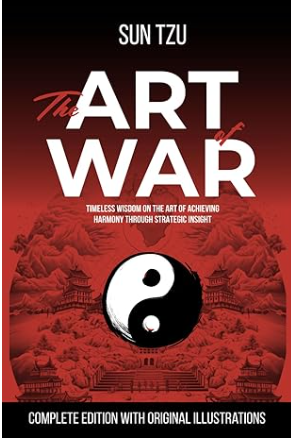
Quotes from “The Art of War”
- “The greatest victory is that which requires no battle”
- “Victorious warriors win first and then go to war, while defeated warriors go to war first and then seek to win”
- “If you know the enemy and you know yourself, you need not fear the result of a hundred battles. If you know yourself but not the enemy, for every victory gained you will also suffer a defeat. If you know neither the enemy nor yourself, you will succumb in every battle”
- “In the midst of chaos, there is also opportunity”
- “Who wishes to fight must first count the cost”
- “There are not more than five musical notes, yet the combinations of these five give rise to more melodies than can ever be heard.”
- “All warfare is based on deception.”
- “It is easy to love your friend, but sometimes the hardest lesson to learn is to love your enemy”
- “It is easy to love your friend, but sometimes the hardest lesson to learn is to love your enemy”
- “Anger may in time change to gladness… But a kingdom that has once been destroyed can never come again into being”
- “Opportunities multiply as they are seized.”
The Book of Five Rings — Miyamoto Musashi
Written by a legendary samurai who never lost a duel, this book goes far beyond sword fighting. It’s about mastering your craft, adapting to change, and developing an unshakable mindset. Musashi teaches that true strategy comes from deep understanding, fluid thinking, and relentless discipline. Like The Art of War, this is a favorite among world-class CTOs and founders — a philosophical guide to focus, resilience, and winning without wasted motion. Whether you’re writing code or leading a team, Musashi’s principles will sharpen how you think, move, and respond under pressure.
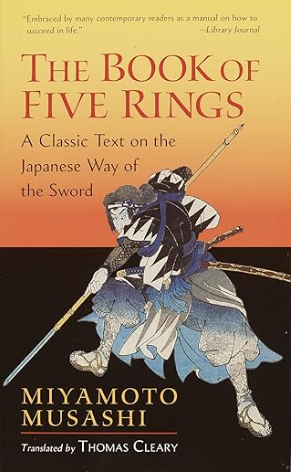
Quotes from “The Book of Five Rings”
- “There is nothing outside of yourself that can ever enable you to get better, stronger, richer, quicker, or smarter. Everything is within. Everything exists. Seek nothing outside of yourself.”
- “You must understand that there is more than one path to the top of the mountain”
- “Today is victory over yourself of yesterday; tomorrow is your victory over lesser men.”
- “The important thing in strategy is to suppress the enemy’s useful actions but allow his useless actions”
- “There is no one way to salvation, whatever the manner in which a man may proceed. All forms and variations are governed by the eternal intelligence of the Universe that enables a man to approach perfection. It may be in the arts of music and painting or it may be in commerce, law, or medicine. It may be in the study of war or the study of peace. Each is as important as any other. Spiritual enlightenment through religious meditation such as Zen or in any other way is as viable and functional as any “Way.”… A person should study as they see fit.”
“The Prince” — Niccolò Machiavelli
Written in 1513, The Prince is a political treatise that offers advice to rulers on how to maintain power and navigate the complexities of leadership. Machiavelli advocates for pragmatic, often ruthless strategies, suggesting that the ends justify the means when it comes to power. He emphasizes the importance of adaptability, suggesting that a leader must be able to act immorally or deceptively when necessary to secure the state and maintain authority. Key concepts include the use of fear over love, the importance of appearing virtuous while being willing to act otherwise, and understanding the nature of power dynamics.
For modern leaders, especially senior engineers and executives, The Prince offers valuable lessons on strategic thinking, decision-making under pressure, and the realities of leadership. Though controversial, its insights into human nature, politics, and influence are still widely regarded as essential for anyone in a position of power.

Core Message:
Power is not won through idealism or
strict morality, but through pragmatism, adaptability, and sometimes even deception. A leader must
understand the complexities of human nature, be willing to do whatever it takes to protect their position,
and recognize that maintaining power often requires making difficult, unpopular decisions.
Alice in Wonderland — Lewis Carroll
Don’t be fooled by the talking rabbits and tea parties — Alice in Wonderland is not just a children’s book. Beneath its whimsical surface lies a brilliantly layered exploration of logic, identity, language, and the absurdity of rigid systems. Lewis Carroll — a mathematician, logician, and storyteller — wove deep philosophical questions into surreal, dreamlike narratives that challenge how we think and perceive reality.
This book is a masterclass in creative thinking and mental flexibility. It reminds senior engineers and technical leaders that not everything follows predictable rules — and that sometimes, the best way to understand a system is to turn it upside down. Carroll’s genius lies in his ability to hide profound truths in nonsense, making Alice in Wonderland a timeless read for anyone who leads, builds, or questions.

1. Logic in Chaos: Learning to Think Differently
From the Mad Hatter’s riddles to the Queen’s nonsensical rules, Alice’s journey is filled with moments where logic is twisted and traditional reasoning breaks down. For technical minds, this is a powerful reminder: in complex systems — whether in code, organizations, or life — linear thinking doesn’t always apply. Carroll, a master logician, challenges readers to embrace uncertainty and approach problems from unexpected angles.
2. Identity and Adaptability: “Who in the World Am I?”
One of the recurring themes is Alice questioning who she is. As she changes size and navigates bizarre social dynamics, she constantly adapts to survive. This mirrors the journey of senior engineers and technical leaders — as you grow in your career, titles, responsibilities, and roles change. Staying adaptable while staying true to your core values is part of the leadership path.
3. Language, Rules, and Absurd Systems
The world Carroll creates is full of arbitrary rules — cards painting roses red, creatures enforcing illogical laws. It reflects the bureaucracies and rigid systems we often face in real-world organizations. Alice in Wonderland playfully teaches that rules must be questioned, language shapes power, and clarity of thought is your best tool in an irrational world.
Quotes from Alice in Wonderland
“Alice laughed. ‘There’s no use trying,’ she said. ‘One can’t believe impossible things.’
I daresay you haven’t had much practice,’ said the Queen. ‘When I was your age, I always did it for half-an-hour a day. Why, sometimes I’ve believed as many as six impossible things before breakfast. There goes the shawl again!”
Core Message:
Believing in the impossible isn’t foolish — it’s a skill. The Queen is suggesting that training your mind to imagine beyond logic and limits is a kind of mental strength. It’s how innovation starts.
“Would you tell me, please, which way I ought to go from here?’
‘That depends a good deal on where you want to get to,’ said the Cat.
‘I don’t much care where -’ said Alice.
‘Then it doesn’t matter which way you go,’ said the Cat.
‘- so long as I get SOMEWHERE,’ Alice added as an explanation.
‘Oh, you’re sure to do that,’ said the Cat, ‘if you only walk long enough.”
Core Message:
If you don’t know where you’re going, every road will lead you nowhere — or worse, the wrong direction. Clear vision matters.
Jonathan Livingston Seagull — Richard Bach
This is not just a story about a bird — it’s a story about breaking limits. Jonathan is a seagull who refuses to conform to the flock’s expectations. While others focus only on survival, he’s obsessed with flight, mastery, and pushing boundaries. Cast out for thinking differently, Jonathan’s journey becomes a metaphor for anyone who chooses excellence over comfort, growth over acceptance.
For senior engineers and tech leaders, this book is a powerful reminder: true innovation means defying norms, embracing solitude, and constantly reaching for something greater — not for praise, but for the joy of perfecting your craft.
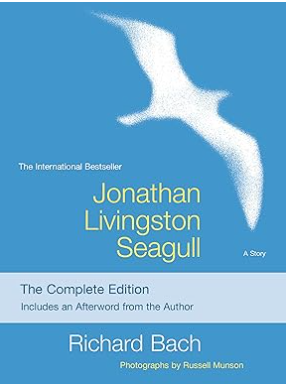
Core Message:
True fulfillment and greatness come
from pursuing one’s passions and constantly seeking personal growth, regardless of societal expectations.
Jonathan Livingston Seagull encourages readers to overcome
limitations, pursue their dreams, and realize their full potential by following their inner calling, no
matter how unconventional.
T.A.Z.: The Temporary Autonomous Zone — Hakim Bey
This book is a manifesto of creative rebellion. Hakim Bey introduces the idea of a “Temporary Autonomous Zone” — a space outside of formal structures and control, where people can freely express, create, and experiment. It’s not about overthrowing systems through force, but about slipping between the cracks of rigid hierarchies to build something ephemeral, free, and radically alive.
For senior engineers, T.A.Z. resonates deeply in an age of over-structured processes and corporate bloat. It’s a reminder that real innovation often happens in “unofficial” spaces — in skunkworks, hackathons, side projects, and small, liberated teams. Bey’s vision challenges you to find autonomy within structure, to embrace impermanence, and to prioritize meaning over permission.

Why Startups Need a Bit of Anarchist Thinking
Anarchist thinking isn’t about chaos — it’s about questioning rigid hierarchies, rejecting unnecessary control, and empowering individuals to act with autonomy and purpose. In the startup world, this mindset is crucial. Early-stage teams thrive on speed, trust, self-direction, and creative rule-breaking. Bureaucracy kills innovation; structure should emerge after momentum, not before it.
By embracing anarchist principles like decentralization, voluntary collaboration, and temporary autonomous zones (T.A.Z.), startups can build cultures where ideas move faster than approvals, leadership is earned — not assigned — and people solve problems without waiting for permission.
True disruption doesn’t come from following the rules. It comes from inventing new ones.
Twitter :
Jack Dorsey, co-founder and former CEO of Twitter (before Elon Musk’s acquisition), once described Twitter as a platform that enables people to create their own “temporary autonomous zones,” referencing the concept by anarchist thinker Hakim Bey. He explained that users can quickly form groups around a shared purpose — and just as quickly dissolve them. This dynamic can power anything from casual social gatherings like “tweetups” to large-scale political protests, such as those seen in Iran.
Zero to One — Peter Thiel
In Zero to One, Peter Thiel, the co-founder of PayPal and early investor in Facebook, argues that the most valuable businesses aren’t the ones that copy what others have already done — they’re the ones that create something entirely new. Moving from “zero to one” means innovating in ways that lead to breakthroughs, rather than just improving on existing ideas. Thiel stresses that true innovation is about creating monopolies — companies that dominate their space by offering something so unique that competitors can’t replicate it.
The book dives deep into how startups should focus on building new technologies, avoiding competition, and aiming for visionary goals. Thiel encourages entrepreneurs to ask the hard questions and think critically about where real value lies, urging them to aim for progress that shifts industries, not just small incremental improvements.
Core Message:
Don’t compete to be “better” — aim to
be different. The most successful startups are those that build
something unique, something that takes the world from “zero to one,” creating entirely new markets,
industries, and possibilities. Innovation that truly matters doesn’t just improve the old; it creates the
new.
“The 48 Laws of Power” — Robert Greene
In The 48 Laws of Power, Robert Greene outlines timeless strategies for gaining, maintaining, and wielding power. Drawing from historical examples, the book presents 48 “laws” that cover everything from mastering the art of influence to managing your reputation. Some of the laws may seem ruthless — such as “Crush Your Enemy Totally” or “Never Outshine the Master” — but they are based on principles that have shaped political, social, and business dynamics throughout history.
Greene’s approach is often seen as pragmatic, offering a guide to navigating complex social and professional landscapes. For senior engineers and leaders, the book provides insights into power dynamics, leadership, and how to strategically position oneself in any organization or market.
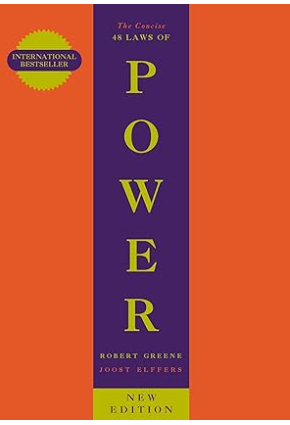
Core Message:
Power is not just about raw strength
or dominance; it’s about perception, strategy, and influence. Mastering the subtle dynamics of power — how
to acquire, protect, and use it — is crucial in both personal and professional life. Whether you’re
building a startup, leading a team, or influencing an industry, understanding power dynamics can be a
game-changer.
“Influence: The Psychology of Persuasion” — Robert Cialdini
In Influence, Robert Cialdini delves into the psychology of persuasion and how individuals and organizations can use principles of influence to shape decisions and behaviors. Through extensive research and real-world examples, Cialdini identifies six key principles of influence: reciprocity, commitment, social proof, authority, liking, and scarcity. These principles show how people are often unconsciously swayed by psychological triggers, which can be leveraged in everything from marketing and sales to leadership and negotiations.
For senior engineers, managers, and leaders, Influence offers practical tools for understanding customer behavior, building better teams, and persuading stakeholders. By mastering these principles, you can enhance your ability to lead, sell ideas, and achieve buy-in from others in both professional and personal contexts.
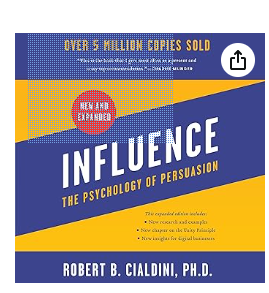
Core Message:
Influence is not about manipulation;
it’s about understanding and harnessing the psychological triggers that drive human behavior. By mastering
the principles of persuasion, you can create stronger relationships, increase your ability to lead
effectively, and achieve greater success in both business and life.
The Lean Startup — Eric Ries
In The Lean Startup, Eric Ries introduces a methodology aimed at helping entrepreneurs build successful startups by focusing on fast iterations, customer feedback, and data-driven decision-making. The core principle is to treat a startup as an experiment, where the focus is on validating hypotheses and learning quickly rather than committing to a long-term plan with uncertain outcomes. Ries advocates for the Build-Measure-Learn loop, which involves developing a minimum viable product (MVP), testing it with real users, and using feedback to make quick adjustments.
The book emphasizes the importance of pivoting when necessary — making changes to a product or business model based on feedback — and continuously improving processes, reducing waste, and focusing on what truly drives value. By using lean principles, startups can minimize risk and maximize the chances of long-term success.
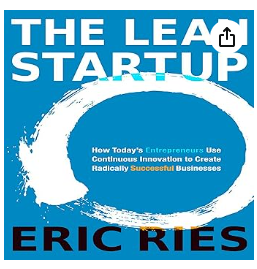
Core Message:
Success in startups comes from rapid
experimentation, learning from failures, and making data-driven decisions. Rather than sticking to a rigid
business plan, entrepreneurs should build an MVP, test it, learn from real-world feedback, and iterate
quickly. The key to growth is being agile, responsive, and constantly optimizing to meet customer needs.
High Output Management — Andrew S. Grove
In High Output Management, Andrew S. Grove, the former CEO of Intel, provides a comprehensive guide to management, focusing on maximizing output and efficiency in organizations. Grove emphasizes that a manager’s primary role is to increase the output of their team by providing clear direction, setting objectives, and creating an environment that fosters productivity. He introduces the concept of leveraging leverage — optimizing team structure, processes, and decision-making so that each action or initiative has the greatest possible impact.
A significant part of the book focuses on the importance of one-on-one meetings, performance reviews, and effective communication. Grove highlights how managers should spend their time, the importance of managing people’s energy and focus, and the need to prioritize tasks and initiatives that have the highest value.
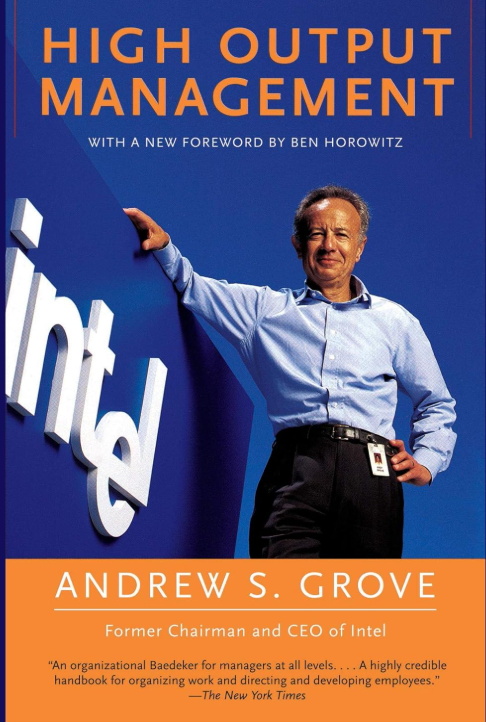
Core Message:
Effective management is about
creating systems, structures, and processes that allow teams to produce high-quality work with minimal
wasted effort. The focus should be on optimizing your team’s output, setting clear priorities, and
ensuring that every decision contributes to long-term success. Great managers focus not just on managing
people, but on enabling them to achieve more.
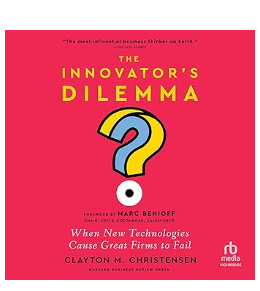
The Innovator’s Dilemma — Clayton Christensen
The Innovator’s Dilemma explores why even the most successful and well-managed companies can fail — not because they’re doing something wrong, but because they’re doing everything “right.” Christensen introduces the concept of disruptive innovation: new technologies or business models that start off as inferior or niche, but eventually evolve to displace established market leaders.
The core dilemma is this: big companies focus on improving existing products for high-value customers (sustaining innovation), which often causes them to ignore new, low-end or emerging markets. Meanwhile, startups or smaller companies take root in these overlooked spaces, innovate rapidly, and eventually move upmarket — disrupting incumbents who can’t pivot fast enough.
Core Message:
Success can breed failure if
companies don’t learn to disrupt themselves. To survive long-term, leaders must be willing to embrace new
technologies, experiment in low-margin or emerging markets, and innovate even if it threatens their
current business model. Disruption often comes from the edge — not the center.
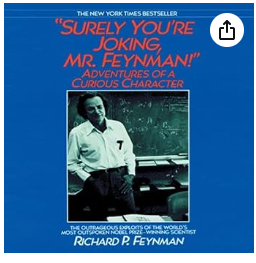
Surely You’re Joking, Mr. Feynman!-Richard P. Feynman
This bestselling memoir by Nobel Prize–winning physicist Richard Feynman isn’t a traditional science book — it’s a brilliant, funny, and deeply human portrait of a mind constantly driven by curiosity. Through a series of quirky, real-life stories, Feynman shares his adventures in everything from cracking safes at Los Alamos to learning to play the bongos, picking up languages, and questioning authority in academia.
The book captures Feynman’s fearless approach to learning, his refusal to follow convention, and his relentless curiosity about how things work — not just in physics, but in life. He didn’t just want answers; he wanted understanding — and he never took expertise, tradition, or hierarchy too seriously.
Core Message:
Stay curious, challenge assumptions,
and never stop exploring — no matter how unconventional the path may seem. Real intelligence isn’t just
knowing facts; it’s asking questions, experimenting freely, and finding joy in the process of discovery.
Only the Paranoid Survive: How to Exploit the Crisis Points That Challenge Every Company — Andrew S. Grove
In this powerful business memoir and strategic guide, Andrew Grove — former CEO of Intel — shares his hard-earned insights on navigating massive change. The book introduces the concept of Strategic Inflection Points: critical moments when a business, market, or technology shifts so drastically that a company must adapt or die. These inflection points can be triggered by competitors, disruptive technology, market shifts, or internal change.
Grove emphasizes that what makes a company successful today can make it vulnerable tomorrow. The key to surviving — and thriving — is maintaining a mindset of constructive paranoia. Leaders must stay alert, continuously question assumptions, and be ready to pivot decisively when threats or opportunities emerge.

Core Message:
Complacency kills. Lasting success
requires staying paranoid, sensing change early, and being bold enough to reinvent yourself before it’s
too late. The companies (and leaders) that survive are those who embrace change, not resist it.
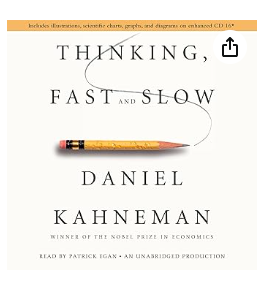
Thinking, Fast and Slow — Daniel Kahneman
In this groundbreaking book, Nobel Prize–winning psychologist Daniel Kahneman explores the two systems that drive how we think:
- System 1 is fast, intuitive, emotional — it makes snap judgments.
- System 2 is slow, deliberate, and logical — it takes effort but handles complex reasoning.
Kahneman explains how much of our decision-making — even in critical or high-stakes situations — is dominated by System 1, leading to cognitive biases, errors, and overconfidence. From business and finance to everyday choices, we often think we’re being rational when we’re not.
He walks through biases like loss aversion, anchoring, the halo effect, and the availability heuristic, showing how they quietly influence our decisions and beliefs.
Core Message:
We are not as rational as we think.
Our minds rely heavily on fast, automatic thinking that’s prone to error — and recognizing these mental
shortcuts is the first step toward better decisions. For engineers, leaders, and problem-solvers,
understanding how thinking works is essential to avoiding blind spots and making smarter, more objective
choices.
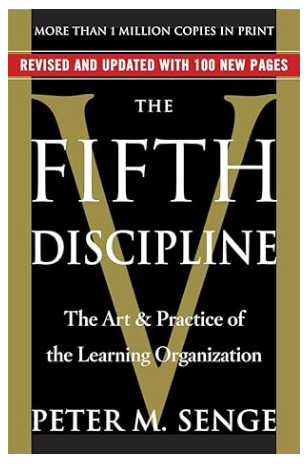
The Fifth Discipline — Peter Senge
In The Fifth Discipline, Peter Senge introduces the concept of “learning organizations”, where organizations continuously evolve and adapt through learning at all levels. Senge argues that the key to long-term success is fostering a culture of continuous improvement, adaptability, and systems thinking. The book identifies five key disciplines that help organizations become more effective at learning and solving complex problems:
- Personal Mastery — Encouraging individuals to continually improve their skills and self-awareness.
- Mental Models — Challenging existing assumptions and thinking patterns.
- Shared Vision — Creating a collective vision that motivates and unites people.
- Team Learning — Promoting collaboration and learning within teams.
- Systems Thinking — The “fifth discipline” and the central idea of the book, which emphasizes understanding the interconnectedness of various elements within a system to solve complex problems holistically.
Core Message:
Organizations that embrace systems
thinking and foster continuous learning are the ones that thrive in complex and rapidly changing
environments. Rather than addressing problems in isolation, systems thinking encourages understanding the whole
system and the relationships between parts, helping teams and leaders anticipate unintended consequences
and create more sustainable solutions.
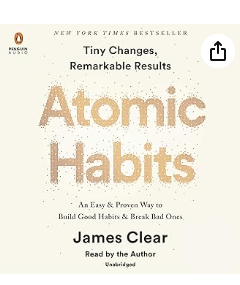
Atomic Habits — James Clear
In Atomic Habits, James Clear explores how small, incremental changes — or “atomic habits” — can lead to massive improvements over time. The book presents a framework for building good habits and breaking bad ones, focusing on the power of consistency and small wins. Clear outlines four key principles, often referred to as the 4 Laws of Behavior Change:
- Make it obvious: Identify cues that prompt good habits and design your environment to support them.
- Make it attractive: Pair habits with things you enjoy, making them more appealing.
- Make it easy: Reduce friction for good habits and simplify the process of starting.
- Make it satisfying: Use rewards and positive reinforcement to reinforce your new habits.
Clear emphasizes that real change happens not through massive efforts, but by optimizing daily behaviors and stacking small habits that compound over time. His approach is based on the idea that habits are the compound interest of self-improvement.
Core Message:
Small habits lead to big results. By
focusing on consistent, incremental improvements and building systems that support positive behavior
change, you can transform your life. The key to lasting success is to focus on the process, not just the
outcome — making tiny improvements every day leads to massive long-term transformation.
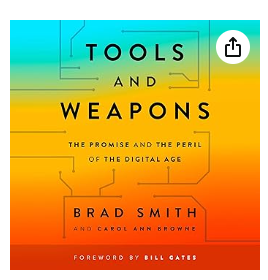
Tools and Weapons — Brad Smith (Microsoft President)
In this insightful book, Brad Smith, President of Microsoft, and Carol Ann Browne delve into the dual nature of technology as both a powerful tool for progress and a potential weapon for harm. Drawing from Microsoft’s experiences and global events, the authors explore critical issues such as cybersecurity, privacy, artificial intelligence, and the ethical responsibilities of tech companies. They emphasize the need for a balanced approach, advocating for collaboration between the tech industry and governments to address challenges like misinformation, digital sovereignty, and the protection of democratic values.
Core Message:
The digital age presents both
unprecedented opportunities and significant risks. To navigate this landscape responsibly, tech companies
must embrace their ethical obligations, and governments must implement thoughtful regulations. Only
through joint efforts can society harness the benefits of technology while mitigating its potential harms.
Making a conclusion
👨👦👦 Leave a comment, I am free for discussion with your any kind technical question.
#Leadership #Philosophy #Psychology #BusinessStrategy #Innovation #PersonalDevelopment #TechnologyCulture #Entrepreneurship #CriticalThinking #TechReadingList